The Mystery of Brera Balivo Rossi: Unfound in Key Italian Data
In the vast landscape of Italian culture, history, and modern influence, certain names resonate deeply. From iconic artistic districts to ancient legal titles and legendary sports figures, Italy's heritage is rich with distinct identifiers. Yet, when the specific combination of brera balivo valentino rossi is sought in comprehensive data sources, a peculiar silence often ensues. This article delves into the intriguing absence of this seemingly Italian-rooted phrase within key datasets, exploring why this particular concatenation remains unfound and what this reveals about the challenges of digital discovery and the nuances of linguistic searches.
The quest for information surrounding brera balivo valentino rossi leads down a path less trodden, one where the individual components are well-documented, but their unique synthesis evades easy categorization. We aim to unravel this mystery, offering insights into potential reasons for its elusive nature and providing strategic approaches for researchers encountering similar informational voids, especially when exploring niche or potentially hypothetical Italian references.
Deconstructing the "Brera Balivo Valentino Rossi" Conundrum
To understand why the full phrase brera balivo valentino rossi might be absent from common records, it's essential to dissect its individual elements. Each part carries significant historical, geographical, or cultural weight within Italy:
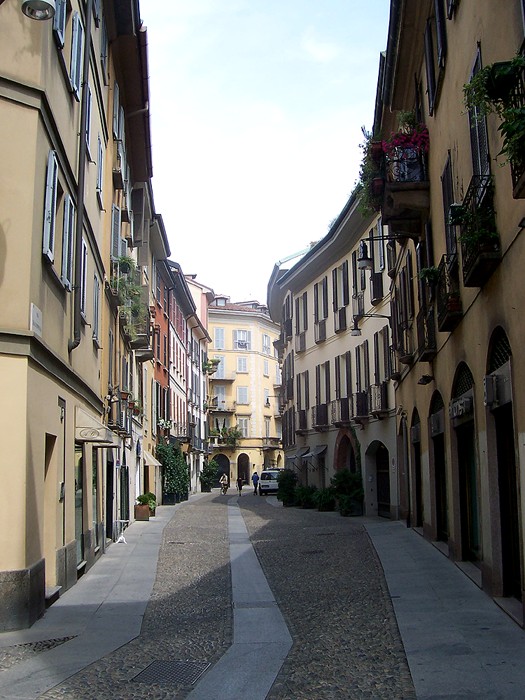
- Brera: More than just a name, Brera is a celebrated district in Milan, renowned globally for its artistic heritage. Home to the Brera Academy of Fine Arts and the Pinacoteca di Brera, it's a focal point for Italian art, culture, and intellectual life. Its mention often evokes images of historic cobblestone streets, vibrant galleries, and scholarly pursuits. The name itself is well-established in countless archives, tourist guides, and academic texts.
- Balivo: This term harks back to medieval and early modern European administrative and legal systems. A 'balivo' (or bailiff in English) was an official responsible for justice, administration, or tax collection within a specific district. While not a common surname today, 'Balivo' could potentially appear as an archaic occupational surname, a historical title, or even a very localized place name. Its presence would typically be found in historical legal documents, genealogical records, or specialized local histories.
- Valentino Rossi: A name that transcends national borders, Valentino Rossi is an undisputed icon of motorcycle racing. Known as "The Doctor," his unparalleled career has made him a global superstar and a household name, particularly in Italy. His name is ubiquitous in sports journalism, fan communities, and pop culture references worldwide.
The puzzle intensifies when considering that individually, these terms are profoundly Italian and well-indexed across various platforms. Yet, their direct combination as brera balivo valentino rossi does not yield relevant results in standard searches, suggesting that it might not represent a recognized entity, person, or established concept. This immediately flags it as a unique research challenge, requiring a more nuanced approach than typical keyword queries.
The Curious Case of Missing Data: Why Conventional Searches Fall Short
The core of the mystery lies in the absence of brera balivo valentino rossi in what one might consider logical starting points for Italian data. As evidenced by our reference contexts, even extensive databases like comprehensive Italian surname origins, leading social media influencer lists, or detailed local event calendars do not register this specific combination. This phenomenon isn't necessarily a failure of the databases themselves but rather an indicator of the unique nature of the search term.
Why do conventional searches, even those leveraging advanced algorithms, fail to uncover information about brera balivo valentino rossi? Several factors might contribute:
- Non-Standard Combination: The most probable reason is that "Brera Balivo Valentino Rossi" is not a conventionally recognized name (like a person's full name, a historical figure, or an official organization). It could be a hypothetical construct, a unique local nickname not widely documented, a very recent and obscure reference, or even a misunderstanding or misinterpretation of disparate elements.
- Specificity vs. Generality: Databases for Italian surnames, for instance, focus on established family names and their etymologies. A phrase like "Brera Balivo" combining a place with an archaic title might not be cataloged as a unified surname. Similarly, social media influencer lists track prominent digital personalities; unless brera balivo valentino rossi represents a specific, verifiable influencer, it won't appear.
- Digital Footprint Gaps: Not everything that exists in the physical world, or even in casual conversation, leaves a clear and indexable digital footprint. Very niche, localized references or ephemeral mentions might never make it into structured databases or commonly crawled web content.
- Contextual Ambiguity: Without a clear context, search engines struggle to connect such a specific string of words to meaningful results. Is it a person? A place? A project? The ambiguity inherent in the combination makes it difficult for algorithms to match it against known entities.
Understanding these limitations is crucial for any researcher encountering similar information voids. Rather than concluding that the term simply doesn't exist, it encourages a shift in search strategy, moving from broad queries to highly targeted investigations. For a deeper dive into how seemingly disparate search contexts can reveal underlying search patterns, even without providing direct answers, consider reading Tracing Brera Balivo Valentino Rossi Through Unrelated Contexts.
Strategies for Unearthing Obscure Italian References
When direct searches for terms like brera balivo valentino rossi yield no results, it's time to employ more sophisticated and analytical search methodologies. The absence of data is, in itself, a form of information that guides a more targeted approach. Here are practical strategies for researchers facing similar dilemmas:
- Segmented Keyword Analysis: Instead of searching for the entire phrase, break it down. Search for "Brera," "Balivo," and "Valentino Rossi" separately. Examine the most common contexts for each. Then, try combining two elements, e.g., "Brera Balivo" or "Balivo Rossi." This helps identify if any smaller combinations have known meanings or associations.
- Utilize Historical and Archival Databases: For terms like 'Balivo,' general web searches are often insufficient. Explore specialized databases for historical legal terms, medieval Italian administrative titles, or regional genealogical archives. University libraries, national archives (like Archivio di Stato in Italy), and local historical societies often hold digitized records that might contain such specific, archaic references.
- Consult Dialectal and Linguistic Resources: Italian dialects are incredibly rich and diverse. Could "Balivo" be a regional variant or an archaic term with a specific meaning in a particular dialect? Consulting linguistic atlases, dialect dictionaries, or historical linguistics experts could provide clues.
- Geographic and Niche Community Focus: If "Brera" is part of the query, focus your search on Milanese historical or cultural forums, local community groups, or specialized art history circles related to the Brera district. Very specific references might exist only within highly localized or niche communities, which may not be indexed by broad search engines.
- Explore Academic and Scholarly Works: Academic papers, theses, and specialized journals often delve into highly specific historical, cultural, or social phenomena that might not feature in general public databases. Use academic search engines like Google Scholar or JSTOR with precise keyword combinations.
- Leverage Social Media (Targeted): While general influencer lists are unhelpful, targeted searches within specific hashtags, groups, or profiles on platforms like Instagram, Facebook, or Reddit (especially local Italian groups) might reveal informal mentions or community-specific uses of the term. Be prepared to filter through much irrelevant content.
- Consider Misinformation or Fictional Origins: In some cases, a unique combination might stem from a fictional work (a book, a game, a movie), a piece of fan fiction, or even a casual misunderstanding that led to its creation. Explore these possibilities if other avenues prove fruitless.
The journey to uncover information about elusive terms like brera balivo valentino rossi can be lengthy but often rewarding in the insights gained about information architecture and digital search efficacy. For a broader perspective on why general Italian searches might not capture such specific or non-standard combinations, delve into Brera Balivo Valentino Rossi: Why General Italian Searches Fail.
The Broader Implications for Digital Archiving and Cultural Discovery
The persistent mystery surrounding brera balivo valentino rossi serves as a microcosm for larger challenges in digital archiving and cultural discovery. In an age where information is supposedly at our fingertips, the inability to locate data on a seemingly coherent, Italian-rooted phrase highlights several critical points:
- The Limits of Big Data: Even vast datasets, when structured for general consumption or specific categories (like surnames or public figures), can have blind spots for unique, anachronistic, or non-standard combinations. "Big data" doesn't automatically mean "comprehensive data" for every conceivable query.
- Importance of Metadata and Context: The effective retrieval of information heavily relies on how it's indexed and contextualized. Without appropriate metadata tagging or an established relationship between the elements of brera balivo valentino rossi, even if fragmented data exists, it cannot be intelligently linked by search algorithms.
- The Value of Localized and Specialized Archives: This scenario underscores the irreplaceable value of hyper-localized archives, specialized historical societies, and academic institutions. These entities often hold niche information that may never be digitized or, if digitized, may not be integrated into general public search engines.
- The Evolving Nature of Digital Footprints: What constitutes a "digital record" is constantly changing. A term might be a passing meme in a local online group, a line in an obscure blog post, or a handwritten note mentioned in a scanned document – all of which present unique challenges for indexing and discoverability.
Ultimately, the search for brera balivo valentino rossi teaches us that digital discovery is an art as much as a science. It requires creativity, an understanding of linguistic and cultural nuances, and a willingness to explore beyond the immediate results of a search engine. It challenges us to think critically about the information we seek and the pathways we use to find it, reminding us that some mysteries are best unraveled through a multi-faceted, patient, and deeply investigative approach.
Conclusion
The phrase brera balivo valentino rossi stands as an intriguing linguistic and informational enigma. Despite comprising individually prominent Italian elements, its combined form remains stubbornly absent from conventional, broad-reaching Italian data sources. This absence isn't necessarily a void, but rather an indicator that the term likely does not represent a widely recognized entity—be it a person, place, or concept—within the standard historical, cultural, or contemporary frameworks that populate our digital archives. The mystery of brera balivo valentino rossi underscores the nuanced challenges of information retrieval in the digital age, highlighting the limitations of broad searches and emphasizing the critical role of segmented analysis, specialized databases, and expert consultation. For researchers and curious minds alike, it serves as a powerful reminder that while the digital world offers unparalleled access, the deepest insights often require a meticulous, creative, and sometimes old-fashioned investigative journey, venturing beyond the readily indexed to truly unearth the hidden stories of a rich cultural landscape.